






Limousine service in Florence - Tuscany and Italy
Private tour to 5 Terre
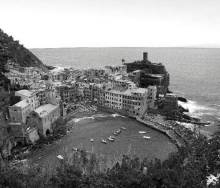
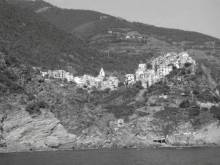
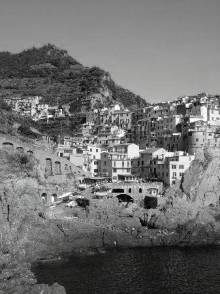
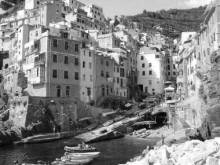
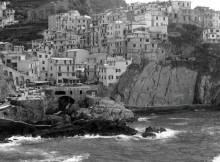
MONTEROSSO AL MARE
From the Middle Ages to the last century:
Histoncal Notes MONTEROSSO AL MARE.
The ancient Latin name of this Roman colony is RUBRA. Living on the hillside above present day Monterosso was the lord of the castle, the Marquis of the Obertenghi (a descendant of the Otto Emperors of Germany). He was called Rufus because of his red hair, and the hill subsequently came to be named after him as "u munte du russu'. The rosy to reddish glow of the mountains at sundown also gives one of the more credible theories of the origins of the name Monterosso. The name is first mentioned in a document published in 1056 to ratify the handing over of lands by the Marquis Guido I from the deceased Alberto Il of the
Obertenghi, to the monastery of San Veniero on the island of Tino. The original village at the foot of the hill of San Cristoforo (Saint Christopher), Buranco, expanded when the inhabitants of Albereto (today an outlying mountain ward of Monterosso), fleeing from the invasion of Rotari (641-645), sought refuge in the protected village nestling in the "Buranco" valley on San Cristoforo hill. The initial nucleus of the town thus came into being. Around the first decades of the year 1000, Monterosso was contested by the Obertenghi, Da Passano, Fieschi and Malaspina families, though in reality the changing fortunes of this little sea town are linked solely with the Republic of Genoa.
VERNAZZA
An eleventh century document cites this village under Latin name of VULNETIA; this gradually evolved into VERNACIA, until finaily emerging as today's Vernazza. Subjec the lords of Ponzò around 1160, the town fought alongside Genoa in the naval battles against Pisa. Its people were notorious at the time for the raids they carried out against neighbour communities and, on board galleys, against the maritime traffic of the Republics of Pisa and Genoa. This action led to the repeated punishment of Vernazza by Genoa; however, because of the skill and courage they showed at sea, the citizens of Vernazza eventually succeeded in gaining the favour of Genoa, which granted the community the privilege of electing its own representative to parliament. In the twelfth century Vernazza was a fief of the Marquises Da Passano, and then of the
Fieschi family until 1276, in which year they relinquished to Genoa all rights to the town. Under Genoese rule Vernazza acquire a series of fortifications, which are still in part preserved today bequeathing us the castle over the sea with its two linked defence towers. The houses in the settlement which grew up over the centuries are very tall; standing on the banks of a stream which is covered over today, they have a distinctive style of entrance exploiting the differences in level of the land they are perched on, and creating a warren of typical narrow alleyways called "carruggi". The complex residential structure of Vernazza marks it out from other such fishing villages, bearing witness both its economic strength and to its enduring importance down the centuries.
CORNIGLIA
Cornelius, a Roman settier and owner of an estate in this territory which even in those far-off days produced a renowned wine, and Cornelia his mother, must have been the first names known to relate to the Corniglia of today. the story takes us to the excavations at Pompeii, where wine amphoras were found bearing inscriptions showing the provenance of the wine: 'Wine of Cornelia and Cornelius'. this would seem to indicate that the place was Roman in origin. For Corniglia the Middie Ages represented a period of fierce rivalry and violent jealousies between the nobles of the area; the Counts of Lavagna and the Bishop of Luni, the Lords of Carpena and the Doria and Fieschi families. The piace remained associated with the name of the Fieschi family in
particular, throgh its patron saint: Santa Fieschi Adorno. Corniglia needed few defensive fortifications due to its difficulty of access. The ruins of an oid fortress built by the Genoese in 1556 to fend off persistent attacks from pirates have all but disappeared. in former times the town extended further south, but serious erosion by the sea has provoked numerous landslips until the hillside has now become a long rocky reef.
MANAROLA
The village dates back to the end of the twelfth century, and owes its origins to settlers who carne down from VICUS OLEASTER (present-day Volastra) on the mountain towering above, originally populated by Rornan colonists and legionaries. The name almost certainly comes from MANIUM ARULA, probably a tempie dedicated to the Manes (the souls of the departed), built at the bottom of the valley on the land of an ancient Roman family. History tells us that the town was a marquisate of the lords of Carpena before becoming a fief of the Fieschi family, and finally passing into the hands of Genoa. The first settlements near the sea, in a well-defended position on top of a spur of dark rock, were initially built there for strategic reasons; today nothing remains but a tower on the clifftop, used as a dwelling. Manarola is thought to have supplied cellulose to the papermills of Genoa at least up until the fourteenth century. Poplars (known as "arbuelle) were widely cultivated in the area, while pulping was carried out by a number of watermills, about twenty in all, situated along the banks of the River Groppo; unfortunately the ruins oftwo mills are all that we have left from that era today. After pulping, the cellulose would
have been transported by sea from the little harbour of Palaedo. We should include a mention of Volastra, the place from which Manarola sprang, itself rich in history and tales with a legendary flavour. There was Ariano II, who had the piace built below Campo Vasto; his son Luneto, who drowned at the hands of Guido of the Longobards; and Amato Persiano; not forgetting Emperor Maximilian and his son Diocletian, who, it seems, not only lived in Campo Vasto, but also died there; in fact, he is supposed to have been buried in a tower here, his remains placed in a stone urn set with gold and precious stones. In 1247 Pope Innocent IV ordered a search for this funerary urn; several forays brought nothing more to light than a series of other objects dating from that period, with no trace of the urn. It was Pietro, the son of Clemente Fieschi, lord of the castle of Corniglia, who handed the finds over to the Pope, and reported to him on the searches carried out; in recognition, Innocent IV gave him a huge silver bel! to hang in Campo Vasto. Legend has it that on stormy nights the bel! could be heard ringing; but who rang it always remained a mystery, like the mystery shrouding the disappearance of the massive silver bell itself.
RIOMAGGIORE
Like Manarola, this village is also of recent origin compared to the other towns of the Cinque Terre, bing founded around the end of the twelfth century following the migration towards the coast of the inhabitants of Monte Verugora and Montenero. Here were to be found the first settlements dating from the seventh century, built by Greek emigrants, the Achaeans. The name RIVUS MAJOR probably originates from the former name of the larger of the two rivers flowing through the town; the other, the Rio Finale, borders the territory of Manarola. Towards the end of the twelfth century the village became a fief of Marquis Turcotti, Lord of Ripalta near Brugnato, who we have to thank for the first fortification works and the construction of the castle
on the hill of Cerrico overlooking the maritime village. From Ripalta the fief passed to Marquis Nicolò Fieschi and was eventually inherited by the Bishop of Luni, Antonio Fieschi. The town was dominated by the Fiesci until 1360, when it was yielded up to the Republic of Genoa and acquired the same duties and privileges as those of the citizens of the "Serenissima Dominante' (the Venetian Republic). This marked the beginning of an intense period of developemend and trade, a golden age coinciding with the Renaissance splendour of the fourteenth century.



PRIVATE TOURS - some suggestion
DEPARTURE FROM FLORENCE:
ART AND HISTORY PRIVATE TOURS
- San Gimignano - Monteriggioni - Siena
- Chianti - Siena
- Montalcino - Sant' Antimo Abbey
- Montepulciano - Pienza - Val D'Orcia
- Pisa - Lucca
- 5 Terre
WINE AND FOOD EXPERIENCE
- Chianti Classico wine tour - Antinori and Fonterutoli
- Montepulciano nobile wine tour - Poliziano and Valdipiatta
- Montalcino Brunello - Banfi and Barbi
TOP CLASS WINE TOURS
DEPARTURE FROM LIVORNO CRUISE TERMINAL
- Florence - Pisa
- Pisa - Lucca
- Pisa and wine tour
- San Gimignano - Monteriggioni - Siena
- 5 Terre
- Chianti Classico wine tour - Antinori and Fonterutoli
TRANSFERS WITH A STOP ALONG THE WAY
between FLORENCE and ROME
San Gimignano private tour by Florence Limousine - Monteriggioni excursion - Private tour to Siena - wine tour to Chianti region - Sienna - Montalcino Brunello wine tour and Sant' Antimo Abbey - Montepulcian private wine tour - Pienza - Val D'Orcia - Pisa car rental with driver - Lucca Limousine service - Private tour to Terre - Chianti Classico wine tour - Antinori and Fonterutoli - Montepulciano nobile wine tour - Poliziano and Valdipiatta - Montalcino Brunello wine tour - Banfi and Barbi - Florence car rental with driver - Chianti Classico wine tour - Antinori and Fonterutoli - Private tour to Arezzo - Orvieto - Pisa Limousine service, private transfers from and to airport - Florence Tuscany Chianti private tours - Limousine Florence and Tuscany - Florence - Livorno limousine private tours from cruise dock in Livorno - livorno cruise car rental with driver - Pisa and Lucca Limousine service - Siena and Chianti Chianti Limousine - Private tours Florence and Chianti region